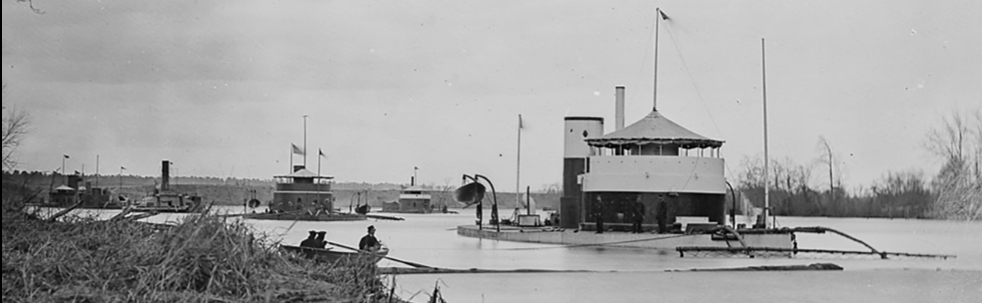
The above illustration is a watercolor painting of the USS Lehigh & USS Sangamon in the James River in 1863. The artwork was made by the late Ian Harley Marshall.
Captain John Ericsson’s Passaic-Class of Iron-Clad Monitors
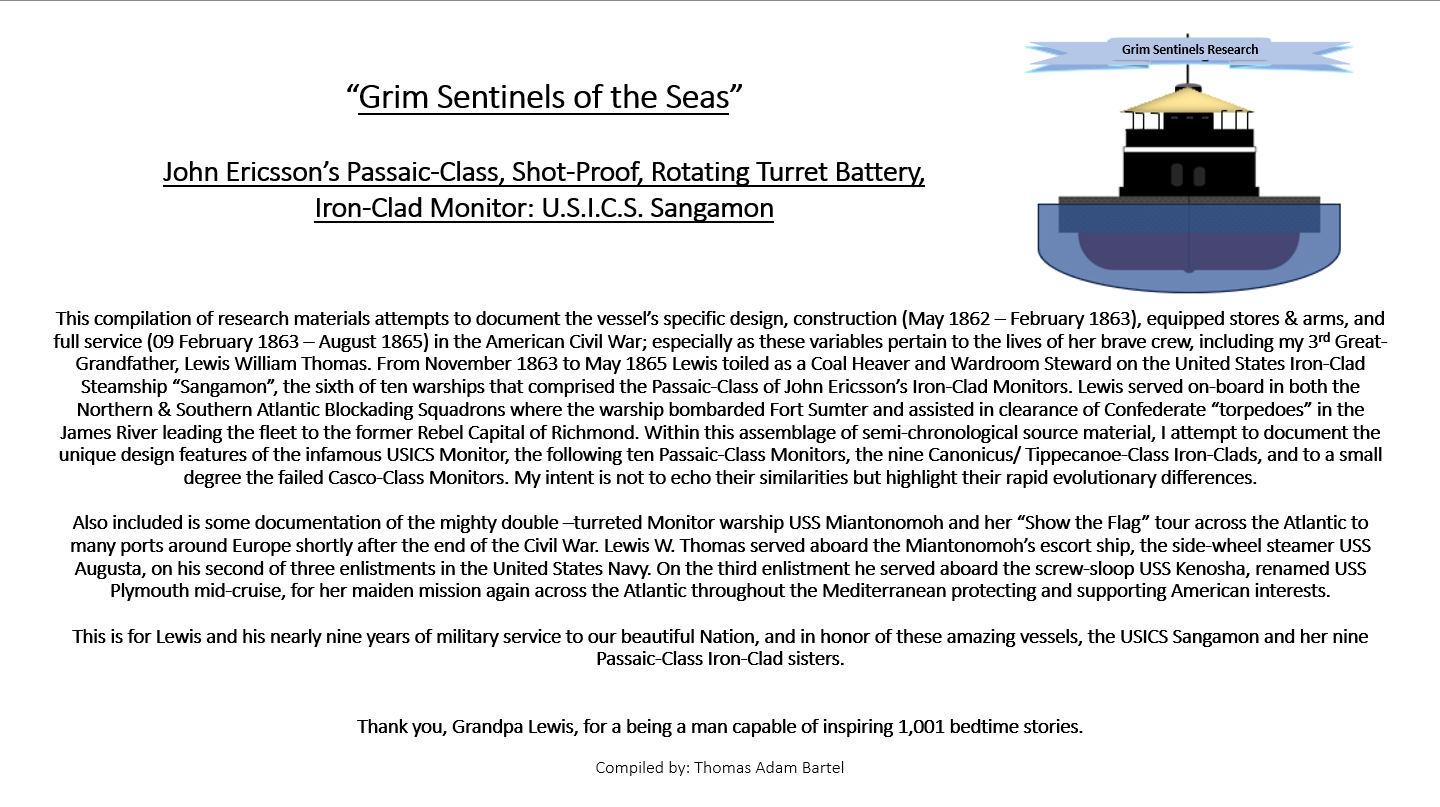
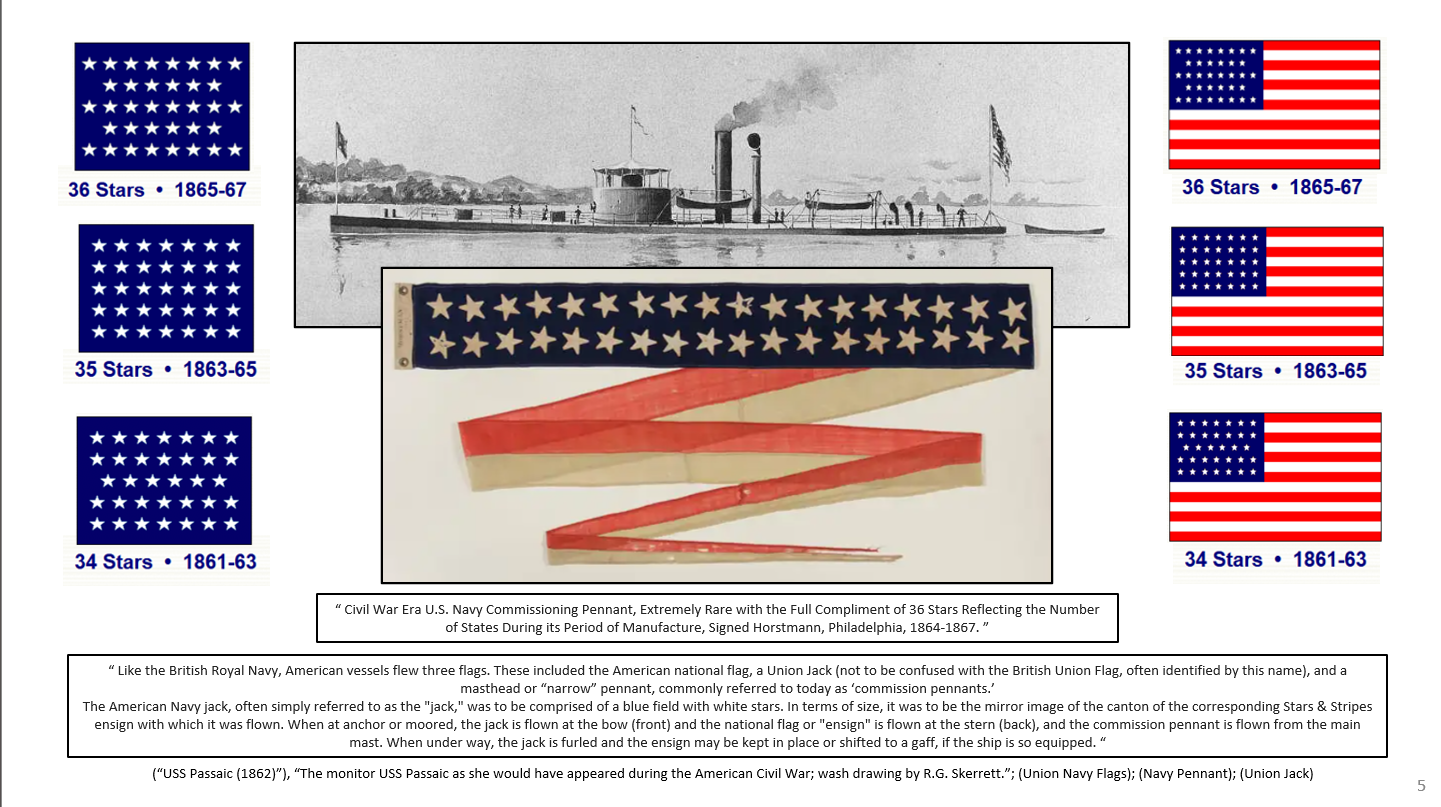
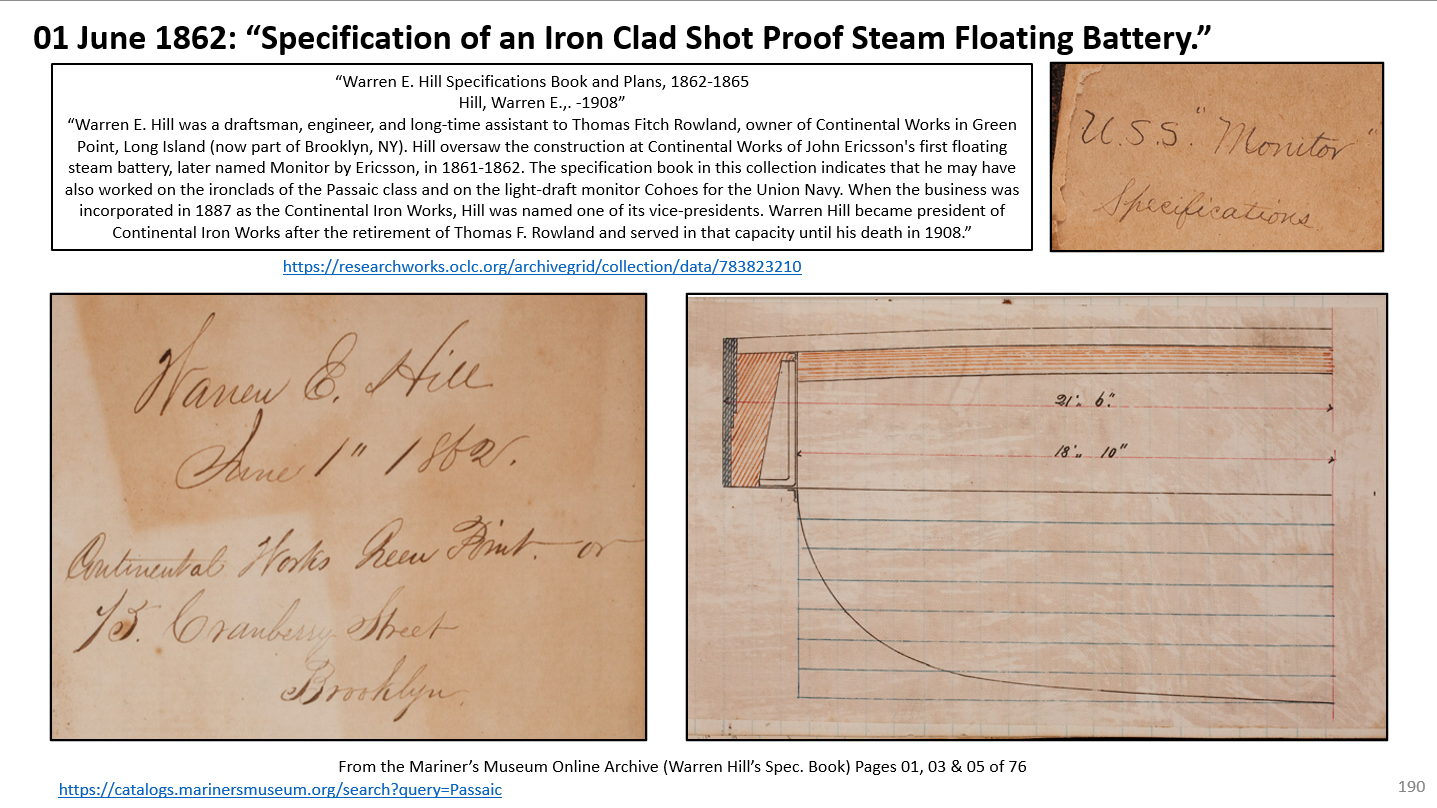
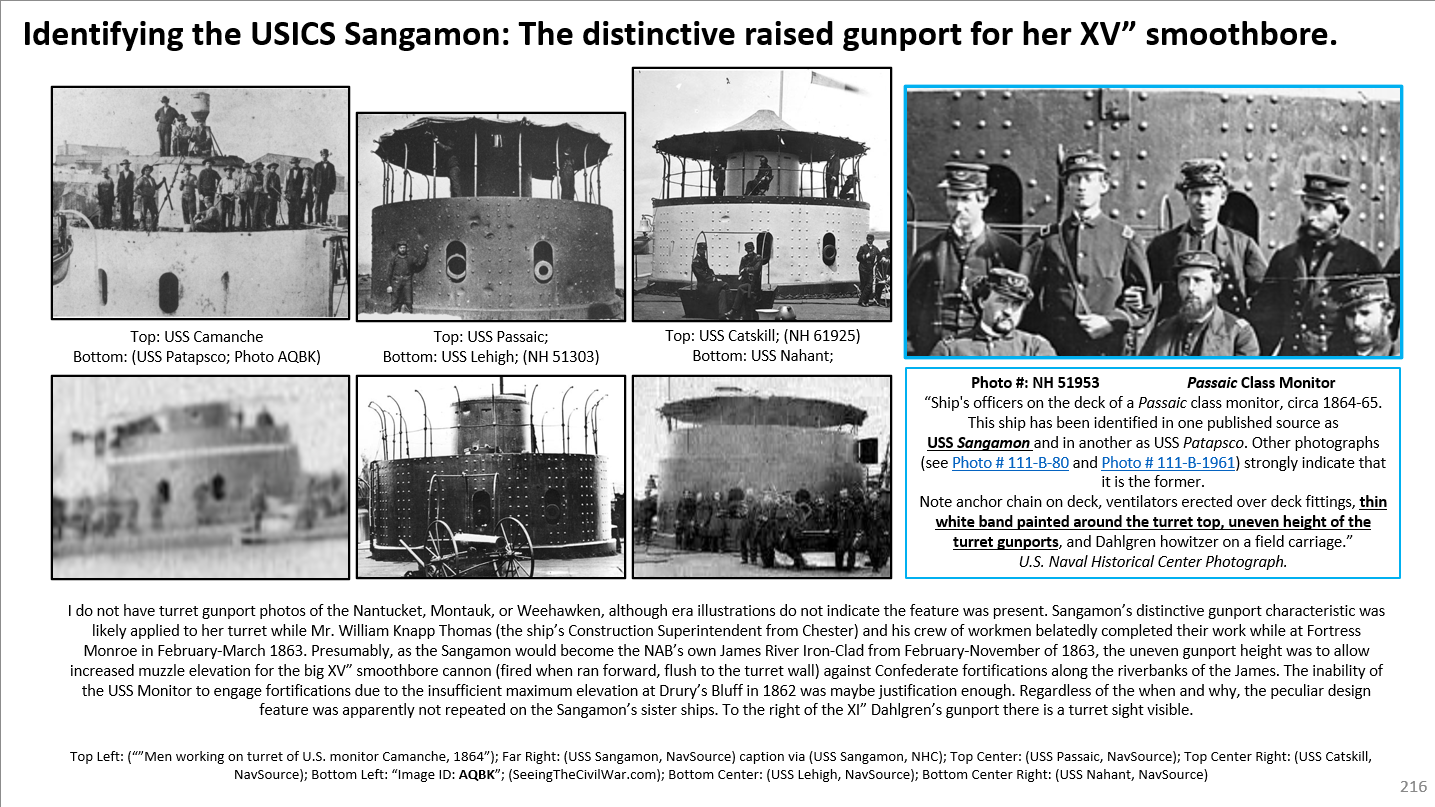
Slides from my research document titled “Grim Sentinels of the Seas”
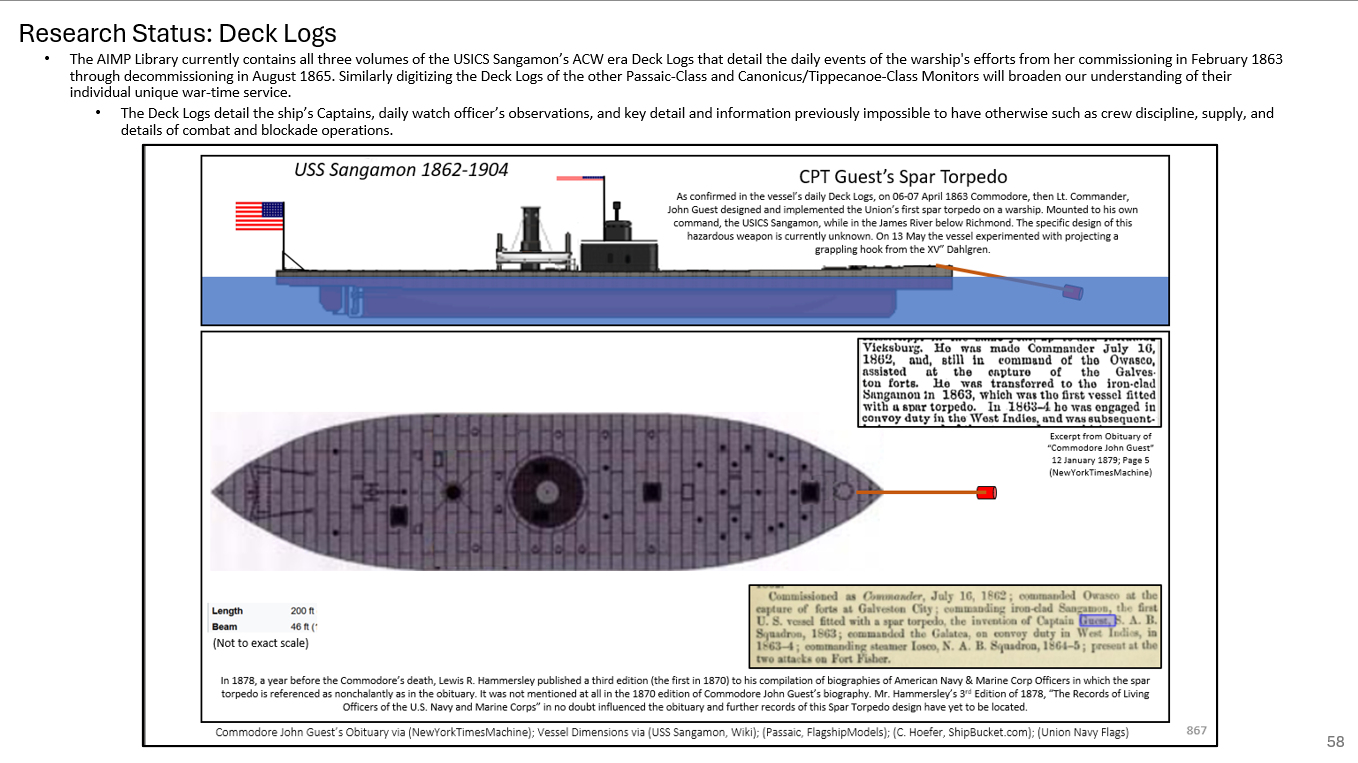
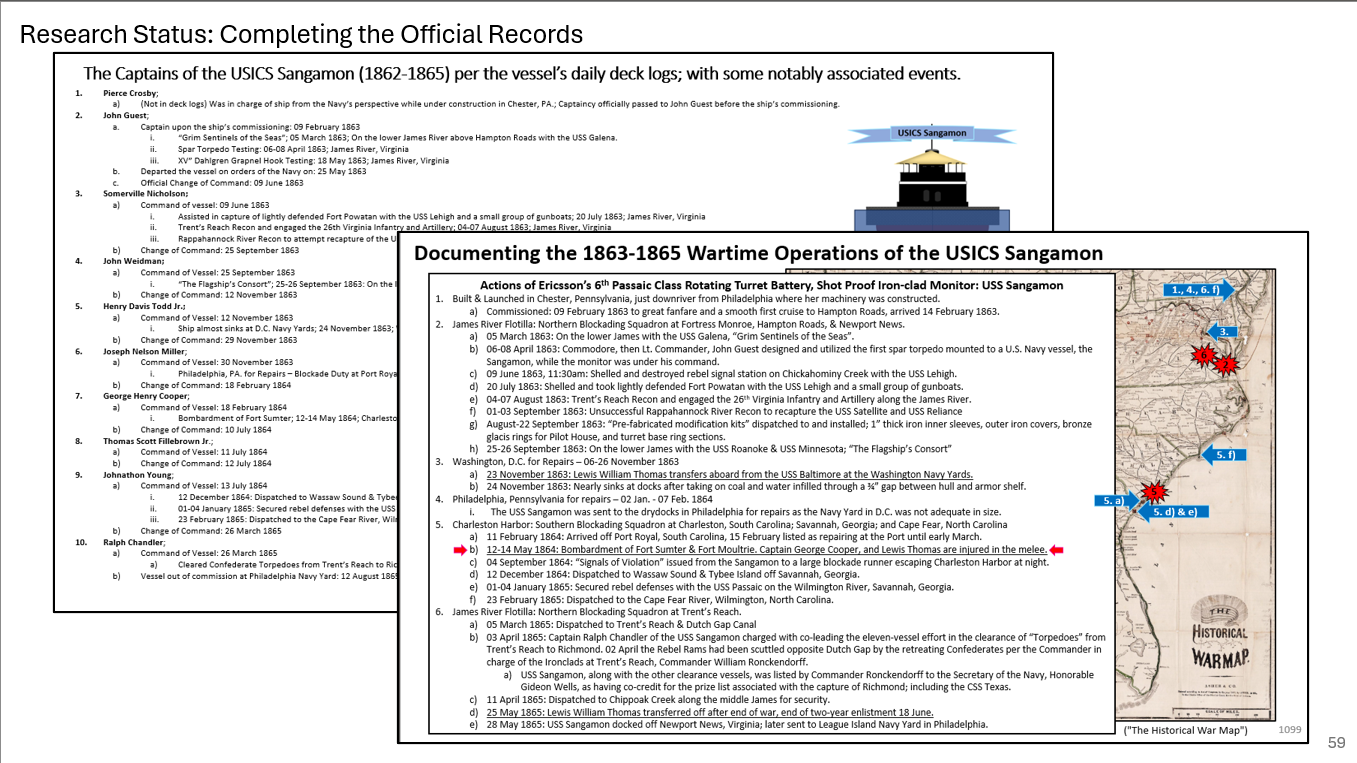
Chronicling the need, design, construction, service, and limitations of the 10 Passaic Class Monitors, specifically the United States Iron-Clad Steamship Sangamon. Warships that were nearly immediately authorized for construction after the showdown between the USS Monitor and CSS Virginia at Hampton Roads, Virginia on the 9th of March 1862 during the American War of the Rebellion.
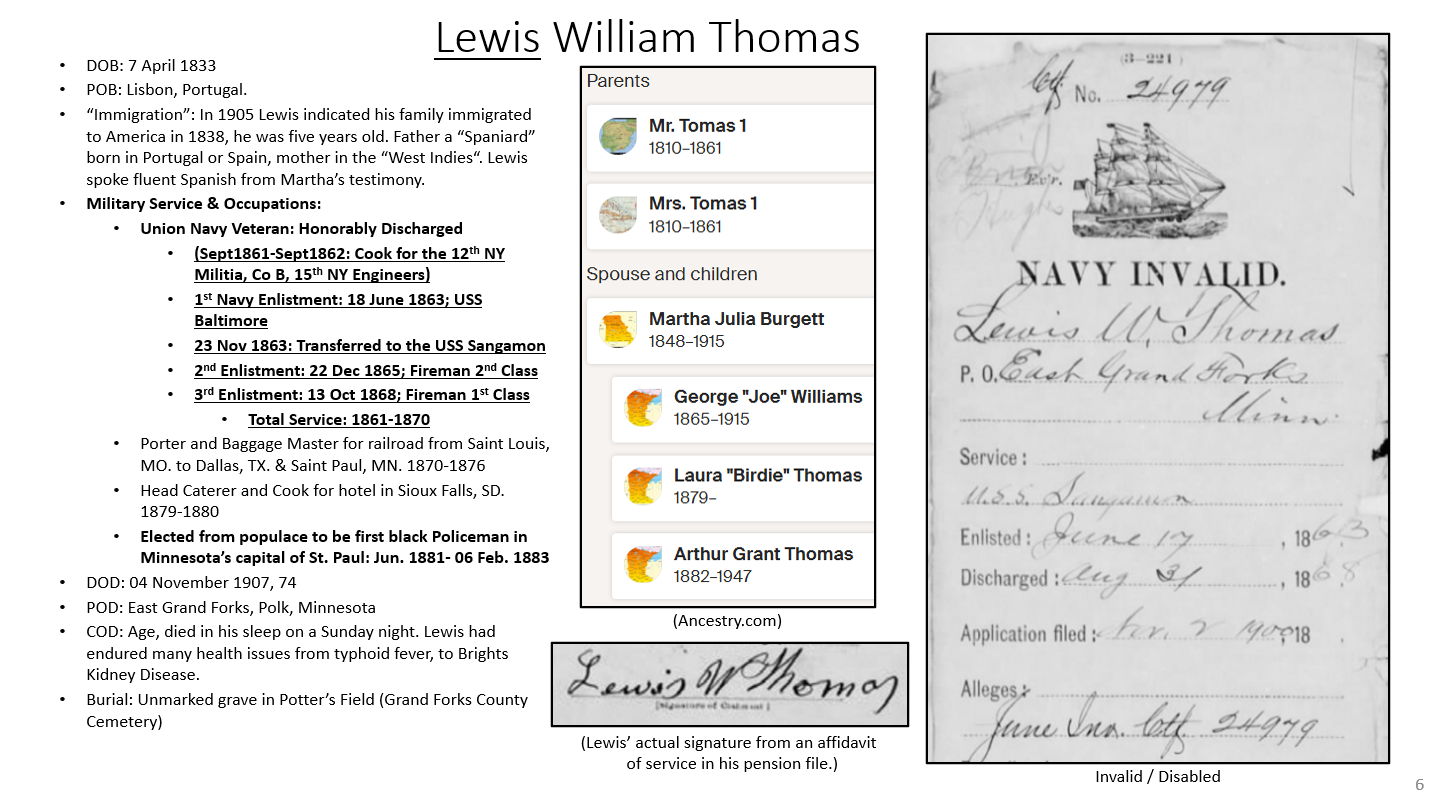
This will serve as a repository of sorts, a place to store the amassed knowledge of over 150 years of researchers, historians, artists, and storytellers. My 3rd Great-Grandfather, Lewis William Thomas, was among many things during his life a Coal Heaver, Fireman, and Wardroom Steward on the USICS Sangamon, the 6th Passaic-Class Monitor, from 23 November 1863 through the end of the Civil War where he would serve yet another 5 years under the mast… or smokestacks as they were, twice across the Atlantic and into the Mediterranean in support of American diplomacy. It was not only the blood connection to the Sangamon that has fueled this research but my sincere appreciation for their mission; as I had conducted Route & Area Clearance operations in the sands and streets of Iraq and Afghanistan the Union’s Naval forces comparatively cleared similar improvised explosive devices from the waterways of our embattled Nation. Coined “torpedoes” then, and simply IEDs now, the aim in their employment is the same - “ungodly” and devastating explosive defenses against armored foes.
It was ancestry research that led me to Lewis’ amazing story, then the story of the Sangamon, and then of the Passaics. These warships, despite their flaws and vulnerabilities, served our nation valiantly from Charleston’s “Rebellion Road” all the way to the San Francisco Bay where the USICS Camanche was slated to serve. Mr. Frank M. Bennett may have said it best in his “Steam Navy of the United States” written in 1896: “There is perhaps no more eloquent tribute to the genius of John Ericsson that the fact that of the thirteen single turreted monitors that remain in our navy as the survivors of the many vessels of that type built during the war, eight are members of the original ten of the Passaic class.”